20 New Ideas For Deciding On Termite Extermination Services In Jakarta
Wiki Article
Javanese: Preserving The Structures Of The Past
Every heritage structure is a storyteller. The first is inscribed in carved teak and colonial-era joinery--craftsmanship that has survived earthquakes, regime changes, and a century of tropical rainfall. The second tale is told in mud tubes and a frass. Also, it includes the hollow echo left by a timber that was reduced to veneer by termites. The conservation of Javanese timber in heritage buildings is not museum work and is a forensic process. The wood is less resistant to decay than they were portrayed to be. The authentically-sourced replacement wood could be the most attractive to subterranean termites. In order to provide anti-termite protection, the heritage contracts should include species identification, verification of heartwood and preservation methods that protect the construction histories of the colonial period woven in the grain.
1. The teak you purchase today isn't the same as heritage teak
Javanese teak that has been aged, harvested between 40 and 60 years old, is a source of essential oils as well as silica. These compounds hinder termites from feeding. Plantation teak that is harvested between 15 and twenty years is not contaminated. Heritage structures which are no longer in use aren't typically failing due to being constructed with decayed timber, instead, they are often failing because repairs from the 20th century made use of teak that termites consume. Prior to installing new timber, exterminators must check to determine if it is resistant.
2. Heartwood Vs. Sapwood: the Invisible Durability Gap
A single timber could have two levels of durability. Mahoni heartwood is resistant to termites, mahoni sapwood is highly vulnerable. Nangka sapwood has a Class V rating, the lowest possibility. If restoration contractors for heritage projects specify wood species without mentioning heartwood manufacturing only they will install termite-resistant materials to construct structures that have stood the test of years due to their old growth resistant. Anti-termite service providers should request core samples before approving restoration timber.
3. Bamboo Preservation is a reality, but it requires a lot of water.
Untreated bamboo was the cause of the plague campaign in Java. Bamboo itself isn't an issue, it's simply treated bamboo that isn't. The application of vinegar to the tobacco stalks by cold soaking followed by soil that is drenched at the base for 24 hours reduces the damage caused by termites by 30% over the span of 18 months. Surface brushing is not enough to save bamboo structures that have been used for centuries. In addition, the infrastructure for immersion should be in place.
4. Colonial-Era Repairs Are Not Authentic Javanese Wood
Between 1911 and 1942, Dutch plague officers forcibly restored 1.6 million Javanese houses, mandating timber replacements based upon epidemiological criteria but not continuity in culture. Many times, what is described as the traditional Javanese vernacular architecture is actually the colonial public health infrastructure. Anti-termite inspectors who inspect historic structures should distinguish between precolonial joinery and as Dutch-mandated subsitutions. Comparing them is a mistake for both preservation philosophy and risk assessment.
5. Soursop Leaf Extract Works at 25% Concentration
In the process of soaking coconut and durian wood in a 25% solution of leaves of soursop, weight loss caused by termites is decreased to below five percent. This results in a classification that is compliant with the requirements of commercial companies. This is not folk medicine; it is concentration-dependent, replicable, and requires no synthetic chemistry. Jakarta exterminators dealing with clients from the past must partner up with facilities capable to treat their clients in a deep manner, and then verify the concentration of extracts in the treatment documents.
6. SNI Class II Is Not "Termite Proof"
Indonesian National Standard Class II timber--which is classified as "resistant"--still has up to ten percent loss of weight under standard testing against Coptotermes curvignathus. Heritage preservation agreements that stipulate"Class II or higher" without additional interventions are accepting of an estimated consumption. In the case of irreplaceable parts physical barriers and non-repellent lures must be added to the wood.
7. Agathis Timbers as well as Durian Timbers: Heritage Liabilities
Agathis was extensively used in colonial Javanese furnishings as well as interior joinery. Durio zibethinus timber is abundant throughout Central Java heritage structures. Both species are classified as Class V--very poorly resistant--under standardized testing. If they are inspecting structures that belong to the past, exterminators must immediately declare these species as top priority for monitoring. A wooden door frame with Agathis carvings is not an asset to be preserved but is actually a termite-feeding facility in period costume.
8. The content of moisture affects the detection
Termites are not able to detect wood below 12-15 percent moisture, regardless of the type or durability class. Heritage structures often leak, and heritage foundations usually do not have damp-proofing. Anti-termite treatment of heritage timber that does not properly regulate roof drainage, capillary moisture through masonry and downspouts discharge is a costly method to protect wood that has been marked by termites.
9. The 1911 Archive exists and is searchable
University of Cambridge and Dutch Colonial Archives have around 300 images of Javanese construction dating from 1911 to 1929. These photographs document the initial construction techniques and historic repair procedures as well as regional-specific joining techniques. These are forensic documents and not academic treasures. Heritage exterminators who consult photographic archives can distinguish the original fabric from alternatives, and alter the risk assessment.
10. Preservation through Treatment Not Replacement
The Dutch colonial experiences have shown that at a continental scale replacement of building materials can result in houses with a questionable authenticity as well as low termite resistance. When replacing the old wood with plantation lumber, preservation of heritage is not better. The only alternative that is financially and ethically feasible is treating the wood using natural extracts. The targeted baiting method can be applied to textiles that are irreplaceable. Retrofits of physical barriers are also possible without digging up foundations. Anti-termite service providers that present themselves as preservationists, rather than replacement contractors gain the trust of homeowners and specifications from architects.
We also have a conclusion.
Javanese wood conservation isn't a niche area of expertise; it's the original termite-control discipline that was practiced centuries ago before there were synthetic pesticides. The 25 percent threshold for soursop extraction as well as the bamboo-vinegar 18-month protocol and heartwood-verification requirement aren't substitutes for professional termite treatment. They are, instead, heritage-standard professional extermination. Jakarta anti-termite agreements that require heritage standards should invest in the use of immersion tools as well as core sampling devices and training inspectors who can discern between vernacular homes built before colonial times and colonial plague houses. Wood is irreplaceable. The wisdom to protect it is not lost, it is simply not yet fully operational. The homeowners and conservators who make use of these services will be paying significantly more. The market is already there. It's just a matter of which pest control companies choose to service it. Take a look at the top jasa basmi rayap for blog info including pembasmi rayap, jasa anti rayap bandung, anti rayap, jasa pengendalian hama, pintu anti rayap, anti rayap untuk kayu, anti rayap terbaik, jasa pengendalian hama, anti hama, cara membasmi rayap kayu and more.
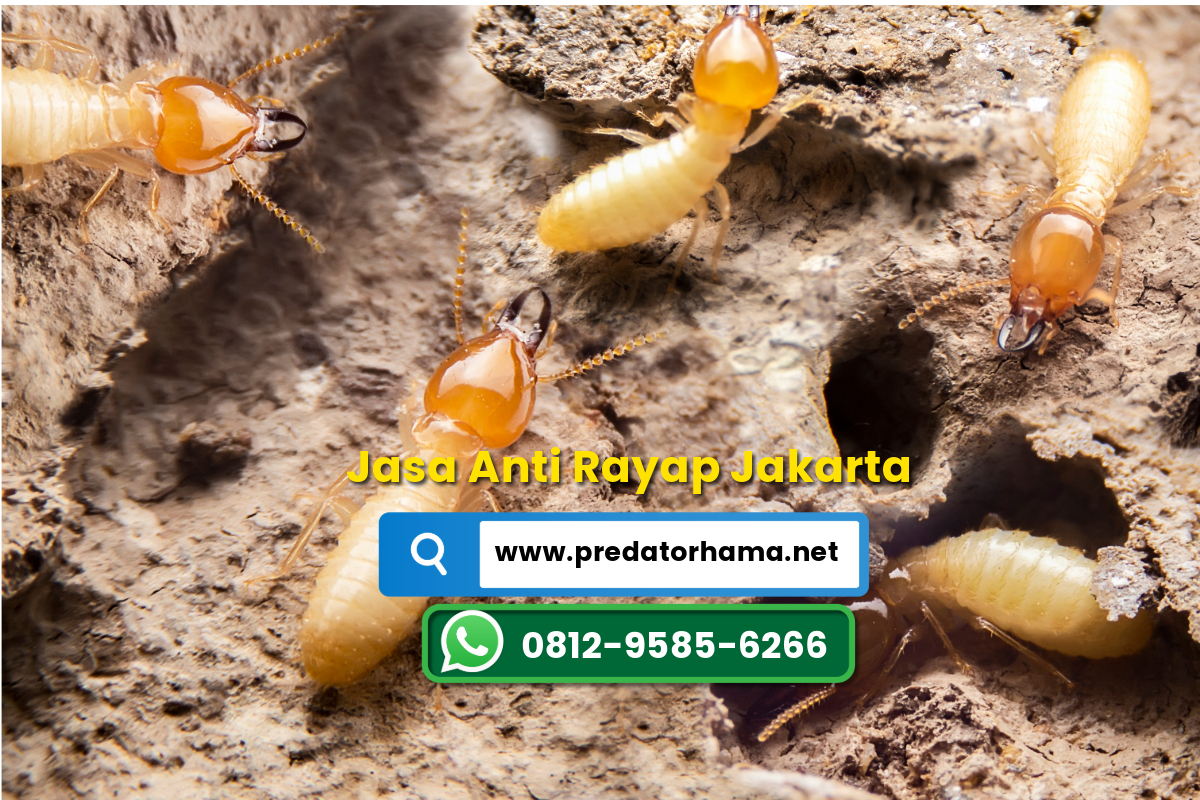
Alternatives To Termite Fumigation For Indonesian Villas Such As Jakarta
Indonesian homeowners are taught to think that tent fumigation will be the only option for subterranean ants to infiltrate walls, roofs, and embedded wood. Fumigation companies promote this mindset and homeowners' anxiety sustains it. The tent falls and the neighbors complain that the family has to leave for 3 days and the community inside is killed. The colony in a garden which has not been exposed to gas will then reconstruct foraging tunnels. They will reenter the structure after 18 months. The building is then sterilized through fumigation, but the landscape reservoir remains unaffected. For Jakarta anti-termite services serving the villa market, offering viable alternatives is not charity; it is competitive positioning. Customers who own eight-bedroom homes located in Pondok Indah and vacation compounds in Puncak are not interested in tenting. They do not want tents but they do need the colony eradicated.
1. Fumigation kills termites inside, Baiting kills the colony
Tent fumigation is a method of administering lethal gas into all void spaces in the building envelope. The termites in the structure are all eliminated. The colony under the driveway, in the garden or the neighboring property isn't affected. The colony dies when toxic agent is delivered to its nucleus through trophallaxis. The colony dies. The structure becomes reinfestation-resistant because the source population is eliminated. This distinction is so crucial that homeowners are less likely to choose the same fumigation method again.
2. The Heat Treatment penetrates where Gas is Not able to
Whole-structure heat treatment raises the internal timber temperature to fifty degrees Celsius that can be sustained for an hour. The treatment is effective in killing all living things, including eggs. There is no requirement for tenting and no chemical residue. It is suitable for Indonesian villas that have intricate carvings and wood from the past, as well as exposed beams. The equipment is available. Contractors exist. The homeowner's knowledge of alternatives that are the problem and not the technology.
3. Electro-Gun Technology For Localized Infection
Infestation areas are heated to death by high-frequency devices. These devices do not damage the materials around them. For villa owners who discover active termites within a single carved door frame or roof truss, electro-gun treatment eliminates the infestation in one visit without evacuating the household. It isn't a new technique and is a standard technology that Jakarta exterminators choose not to import.
4. Wood Injection Systems Preserve Architectural Fabric
The liquid borate formulations that are injected into the drill holes at a pressure, move through the wood using capillary action. This renders the entire substance intoxic to termites for years. The drill holes are smaller than nail holes that are already in use. The carving is intact. The doorframe is still intact. Indonesian homeowners often do not want this treatment, because exterminators are only able to propose it after proposing replacement. Accepted if offered prior to replacement.
5. Baiting from Above for Cavity Colonies
When Coptotermes gestroi constructs an aerial carton nest inside wall cavities or roof spaces, tent fumigation is the preferred method. Bait stations that are above ground and secured to active mud tubes that emerge from the edges of the ceiling or baseboards, deliver poison directly to the nest's inhabitants. The colony can eat its construction workers when they return using the baited tube. There is no tent. No evacuation. No evacuation.
6. Nitrogen Freezing for Small-Scale Heritage Components
Through the circulation of liquid nitrogen through chambers sealed around infested lumber, termites inside the wood are quickly removed. This is followed by a freeze-thaw cycle and repeated. It's not baiting chemically but cryogenic. For villa owners with isolated infestations that are in museums-quality Javanese carving or antique furniture The nitrogen freezing process preserves the patina, which heat treatment might darken and the injection could cause spots to stain.
7. Physical Barrier Retrofits to prevent reinfestation
The rental of temporary sterility facilities is the type of property that is constantly smouldering without the need to install physical barriers. Retrofitting stainless steel mesh or polymer sheets via perimeter excavation stops subterranean ants from re-entering the building after the colony has been eliminated. Fumigation solutions are more compelling when paired with permanent exclusion structures. Sell this combination: baiting will kill the colony, and after that, you can construct the fence. This will make sure that the colony will be the last colony to ever inhabit the structure.
8. Carbon Dioxide Purging for Enclosed Spaces
Carbon dioxide, when pressured and inserted into sealed crawl or attic spaces releases oxygen in such that termites that are trapped within these voids get destroyed. This only requires partial tenting, and not a full enclosure for buildings. CO2 is rapidly dispersed, leaves no residue, and poses no danger to the occupants if re-entry protocols are followed. Indonesian buildings with only roofing structures that are which are affected by termites don't get effectively treated with fumigation.
9. The timeline of Baiting must be made public upstream
Fumigation can kill termites within 72 hours. Baiting eliminates the colony between six to eight weeks. When the timeline is revealed after mobilization, villa owners familiar with tenting's speed will oppose baiting. If the timeline is disclosed prior to contract execution, can be accepted as a price to prevent evacuation. Jakarta anti-termite services that conceal the duration of baiting until after the proposal has been delivered produce their own close rate issues.
10. The Reservoir Colony must be Identified.
In Jakarta each villa is within a few meters of a colony at a minimum regardless of whether it is the park, in a cemetery, or in an undeveloped space. Fumigation does not take into consideration this colony. This colony is also disregarded by heat treatment, injection or baiting, unless they are intended to be used beyond the perimeter of the structure. Comprehensive fumigation alternatives include landscaping baiting grids that target the colony outside that could be re-infesting the house within 18 months. If exterminators treat only the structure, they are not providing a long-lasting solution.
Conclusion
Indonesian homeowners aren't looking to leave their homes. They aren't a fan of tenting on their beautifully manicured lawns. They do not like neighbors calling to inquire if their home is plagued. They really want to destroy the colony, and to have the assurance that the colony won't come back. Fumigation can achieve the first goal effectively however it fails to achieve the second. If used in conjunction with other protocols, rather than alternatives like baiting, heat treatment and microwave technology nitrogen injection into wood CO2 purging and retrofits to physical barriers are able to achieve both goals. Jakarta anti-termite services which position themselves as fumigation alternatives suppliers--carrying multiple elimination technologies, training technicians on species-specific protocols selection, and documenting reinfestation prevention outcomes--will be able to capture the best villa segment currently held by tenting companies. Equipment investment is considerable. The training investment is ongoing. The market demand is already there. The demand is already there. There is a concern about which exterminators are scheduled to arrive with different procedures that have been recorded and won't revert back towards tents. View the most popular anti rayap jakarta for website info including jasa pengendalian hama, jasa anti rayap jakarta, jasa pengendalian hama, rayap kecil, cara membasmi rayap kayu, kitchen set anti rayap, cara membasmi rayap di lemari, rayap kayu, anti rayap, pengendalian hama and more.
